Abstract submission will open in November
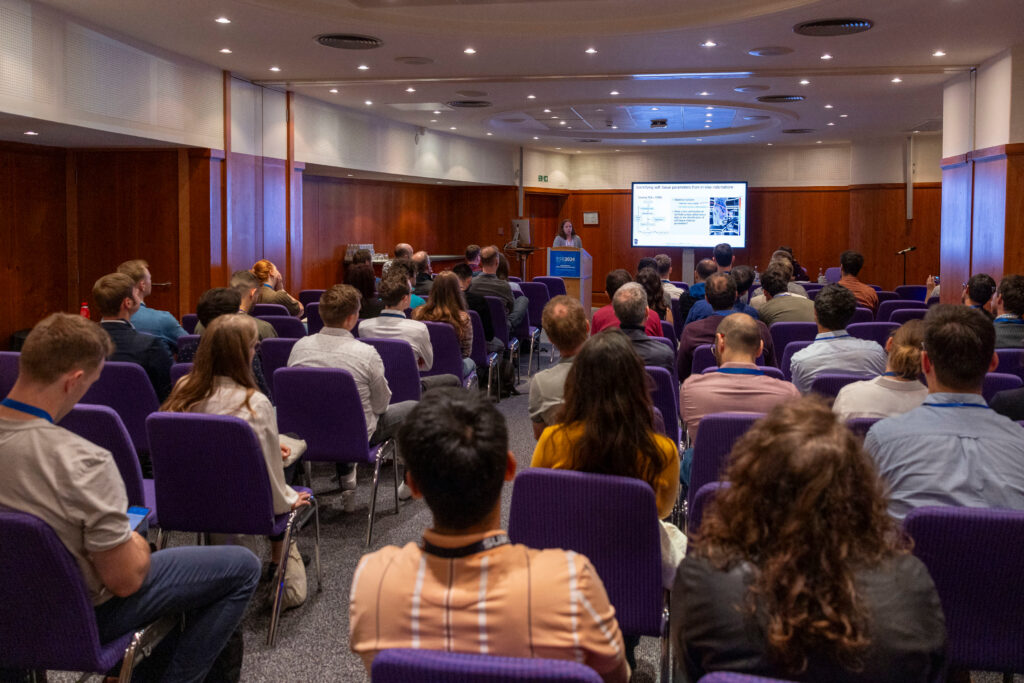
Present your research during ESB 2027!
- Would you like to present your work at one of Europe’s largest biomechanics congresses?
- Are you keen to share your work with key opinion leaders and experts in biomechanics?
- Do you want to connect with peers who share your research interests?
Submit an abstract for ESB 2027! We look forward to seeing you in Berlin!
Submission deadline: 31 January 2027, 23:59 CET
- 00Days
- 00Hours
- 00Minutes
- 00Seconds
How to submit
Prepare your abstract, use the abstract template and don’t exceed one page.
Submit the PDF file not bigger than 1MB through ConfTool.
Wait for an acceptance email coming in March.
Important Information
- At least one author must register in full in order to attend the congress and present the abstract (in case of both Podium presentations and Posters).
- One author must not present more than one oral presentation and one poster presentation.
- Maximum 2 submissions per main author are allowed.
Your abstract will be considered in competition with other submissions. - If the abstract is not deemed suitable for podium presentation, it will automatically be considered for poster presentation.
- List of ESB 2027 tracks (submission categories) is available below and in ConfTool.
- Abstracts template use is mandatory, please download the template here.
- The abstract should be compiled without changing the styles (The easiest way to use this abstract form is by cutting and pasting unformatted text into each section to maintain the document’s present format.)
- The abstract should include the following sections: Introduction, Methods, Results, Discussion, and References.
- Abstracts must not exceed one page (a word count of approximately 500 words).
- The abstracts should be uploaded as PDF document through the conference website. Maximum size of the PDF file: 1MB.
ESB 2027 Main topics
• 3D printing in biomedicine
• Advance computing for biomechanics
• Ageing biomechanics
• AI and machine learning in biomechanics
• Animal and plant biomechanics
• Biomaterials
• Biomechanics in precision medicine
• Biomechanics of movement and posture
• Biomedical imaging
• Cardiovascular biomechanics
• Cellular and molecular biomechanics
• Clinical and translational biomechanics / in silico trials
• Computational biomechanics/biology
• Computer aided diagnosis, planning, and surgery
• Data-driven models and simulations
• Dental biomechanics
• Ergonomics / occupational biomechanics / rehabilitation
• Experimental biomechanics (others)
• Hard tissue biomechanics
• Humanoid robotics and mechatronics
• Impact / injury biomechanics
• Implants/orthotics/prosthetics/devices
• In vivo measurement, sensors and experimental biomechanics
• Mechanobiology
• Musculoskeletal biomechanics and regeneration
• Neuromuscular control biomechanics
• Ocular biomechanics
• Reproductive biomechanics
• Respiratory and fluid biomechanics
• Soft tissue biomechanics
• Spine biomechanics
• Sports biomechanics
• Tissue engineering
• Virtual Reality (VR) and Augmented Reality (AR) in biomechanics
• Wearable technology and biomechanics