
Submission deadline: 30 November 2026
Perspective Talks
A Perspectives Talk (PT) is a ‘mini-keynote’, i.e., an extended presentation that introduces a session. PT is given by an established researcher or tandem of experts from different fields/backgrounds with focus on a cutting edge, coherent body of research. It should give a brief overview of results and unanswered questions, based mainly, but not exclusively on their own and their group’s contribution to this field, and must include future vision and challenges to be targeted. PTs are intended to encourage intergenerational and multidisciplinary networking and to give scientists the opportunity to learn from those with more experience.
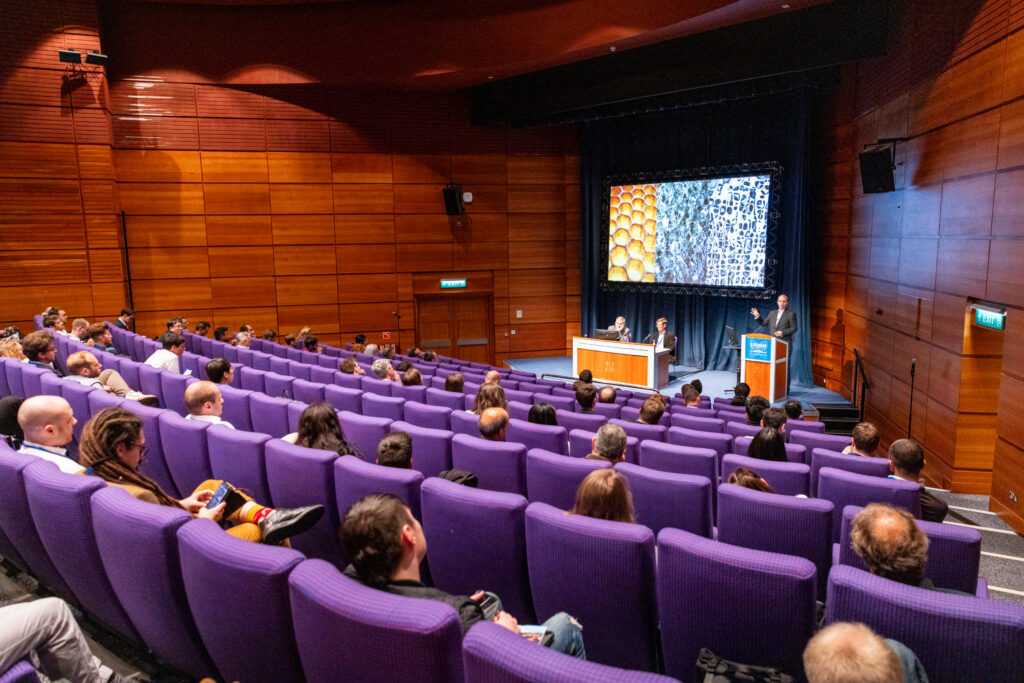
ESB 2025 Perspective Talks
| Author | Institution | Perspective Talk Title | Track |
|---|---|---|---|
| Christoph Kittl | Universitätsklinikum Münster | Translating Knee Biomechanics Into Clinical Practice: From Basic Testing Towards A Subject Specific Knee Model | Knee biomechanics |
| Guillermo Rus | University of Granada | Emerging Elastography Technologies Will Enable Next Generation Viscosity And Nonlinear Biomarkers In Clinical Diagnosis | Biomedical imaging |
| Ning Lan | University of Illinois at Chicago | What Is More Beyond Biomechanics In Motor Rehabilitation | Rehabilitation engineering exoskeletons and assistive devices |
| Philippe Favre | Zimmer Biomet | Paving The Path For In Silico Clinical Trials In Industry | Implants and devices |
| James R. Cotton | Shirley Ryan AbilityLab / Northwestern University | A Pathway To Improving Rehabilitation Outcomes Through AI-Powered | Clinically Accessible Biomechanics AI and machine learning in biomechanics |
| Emanuele Luigi Carniel | University of Padova | Gastrointestinal Biomechanics: In Silico Tools For Diagnosis And Surgery Optimization | Clinical and translational biomechanics |
| Elizabeth A. Zimmermann | McGill University | Bone Mechano-Adaptation And Its Influence On Bone Geometry Microarchitecture And Quality | Bone biomechanics |
| Peter Pivonka | Queensland University of Technology | In-Silico Trials Of Osteoporosis Therapies: Pathways To Optimise And Exploit Existing Drug Treatments | Skeletal adaptation |
| Annegret Mündermann | University of Basel | Advancing Clinical Registries In The Age Of Digital Twins | Clinical and translational biomechanics |
| Barbara Röhrnbauer and Cornelia Betschart | ZHAW Zurich University of Applied Sciences | Novel Interdisciplinary Pathways In Pelvic Floor Disorder Diagnosis And Treatment | Reproductive fetal and neonatal biomechanics |
| Claude Verdier | Laboratoire Interdisciplinaire de Physique (LIPhy) | Biomechanics Of Spheroids As Model Systems To Understand Cancer Invasion | Soft tissue biomechanics |
| Hélène Follet | Inserm | Fracture Risk Prediction Of Metastatic Bone: What Are The Next Steps For Clinical Application? | Musculoskeletal modelling |
| Claudio Chiastra | Politecnico di Torino | Designing Self-Expandable Cardiovascular Devices Through Geometry Material And Process Optimization | Cardiovascular implants and devices |
| Brian Horsak | St. Pölten University of Applied Sciences | Breaking Barriers In Human Motion Capture With AI-Powered Low-Cost Markerless Systems | Movement and posture |
| Maziar Sharbafi | TU DARMSTADT | Bilo: Brain In The Loop Optimization For Cognitive-Driven Assistance | Rehabilitation engineering exoskeletons and assistive devices |
| Ayman Assi | Saint Joseph University of Beirut | Recent Updates On Functional Evaluation Of Patients With Adult Spinal Deformity | Joint kinematics and kinetics |
| Lennart Scheys | KU Leuven | Physiologic Dynamic Ex Vivo Knee Simulators: Past Present And Future | Knee biomechanics |
| Joshua William Giles | University of Victoria | Recent Innovations And Future Directions To Improve Diversity In Shoulder Computational Modeling | Shoulder biomechanics |
| Djordje Slijepcevic | St. Pölten University of Applied Sciences | Unboxing The „Black-Box“: Explaining Machine Learning Models In Human Movement Analysis | AI and machine learning in biomechanics |
| Arif Badrou | University of California Riverside | Development Of Predictive Lung Models Through Novel Experimental Insights | Respiratory and fluid biomechanics |
| Selene Pirola | TU Delft | The Path To Tissue Failure In Aortic Disease: Call For A Paradigm Shift | Cardiovascular biomechanics |
| Michael Neidlin | RWTH Aachen University | The Role Of Virtual Patients In Ecmo Therapy: From High-Resolution Hemodynamics To In-Vivo Blood Damage | Cardiovascular implants and devices |
| Valeria Panzetta | University of Naples Federico II | Unveiling The Future: The Role Of 3D Models In Capturing Tumor Mechanical Complexity | Mechanobiology |
| Noelia Grande Gutierrez | Carnegie Mellon University | Computational Modeling In Placenta Research: Opportunities And Challenges | Reproductive fetal and neonatal biomechanics |
| Ankush Aggarwal | University of Glasgow | Digital Twins Of Cardiovascular Biomechanics: How Can We Achieve This For Each Patient? | AI and machine learning in biomechanics |
| Ardian Jusufi | Empa | Locomotion Neuromechanics With Morphologically Adaptive Soft Robophysical Models | Animal biomechanics |
| Daniel Bruce Ennis | Stanford University | Emerging Methods To Measure Cardiac Kinematics With Mri | Cardiovascular biomechanics |
| Olga Barrera | Oxford Brookes University | Unravelling The Blueprint Of Load-Bearing Architecture Of Soft Tissues For Bio Inspired Innovation | Soft tissue biomechanics |
| Walter Herzog | University of Calgary | Molecular Mechanisms Of Muscle Contraction: Past Present And Future | Musculoskeletal biomechanics |
| Carolin Curtze | Universtity of Nebraska at Omaha | Stepping Outside The Box: Challenges In Assessing Postural Dynamic Stability During Free-Living Mobility | Movement and posture |
| Laura Maria Vergani | Politecnico di Milano | Elucidating Early Bone Pathology: Integrating Biomechanics AI And Synchrotron Imaging | Bone biomechanics |
Present a Perspective Talk during ESB 2027 and share the vision of your field!
Senior researchers are invited to propose Perspective Talks (PTs) in their areas of expertise. A Perspective Talk is a “mini-keynote”—an extended, forward-looking presentation that introduces a scientific session and sets the scene for the contributions and discussion that follow.
A Perspective Talk should:
- Address a cutting-edge and coherent area of research.
- Present a perspective rather than a literature review, highlighting key advances, open questions and emerging directions.
- Provide a balanced and inclusive perspective on the field, integrating relevant work from other researchers and groups alongside the speaker’s own contributions. The talk should reflect the broader state of the field rather than focus primarily on the work of a single research group.
- Look ahead to what comes next, identifying future research directions, opportunities for innovation, and key scientific or translational challenges, with the aim of stimulating discussion and new ideas.
- Encourage intergenerational and multidisciplinary exchange, new ideas and collaborations.
- Be delivered by an established researcher or by a tandem of experts from different disciplines or backgrounds, bringing complementary perspectives to the topic.
New two-page PT abstract template
Perspective Talk proposals should be submitted using the new two-page format. The additional space is intended to allow authors to develop their perspective more clearly, provide sufficient context and references to the broader body of work, and articulate the open questions, future vision and challenges that will form the core of the talk.
The use of the provided abstract template is mandatory.